
Autor: Jwell 2025-06-13
Once, there was an implementation of the plastic ban.Plastic straws were rapidly removed out of the market, while paper straws became mainstream in an extremely short period of time.
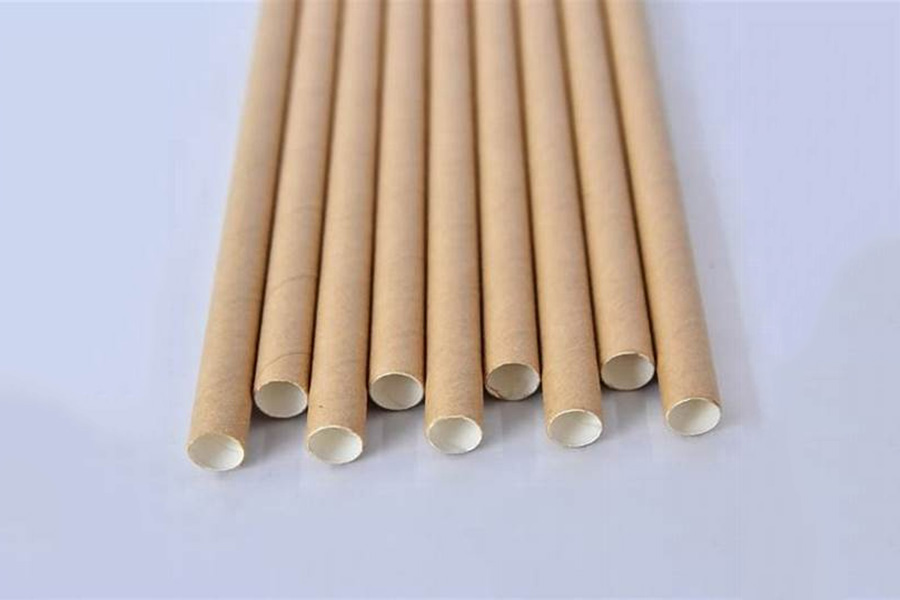
The straws in milk tea shops have all been replaced with paper straws, and the market situation for paper straws is promising.
This point has to be teased. The taste and quality of the paper straws are so bad compared with plastic straw, and even the drink has a smell of paper paste. Then a few short years later, plastic straws come back into our view. Haven't we already restricted the use of traditional plastics?
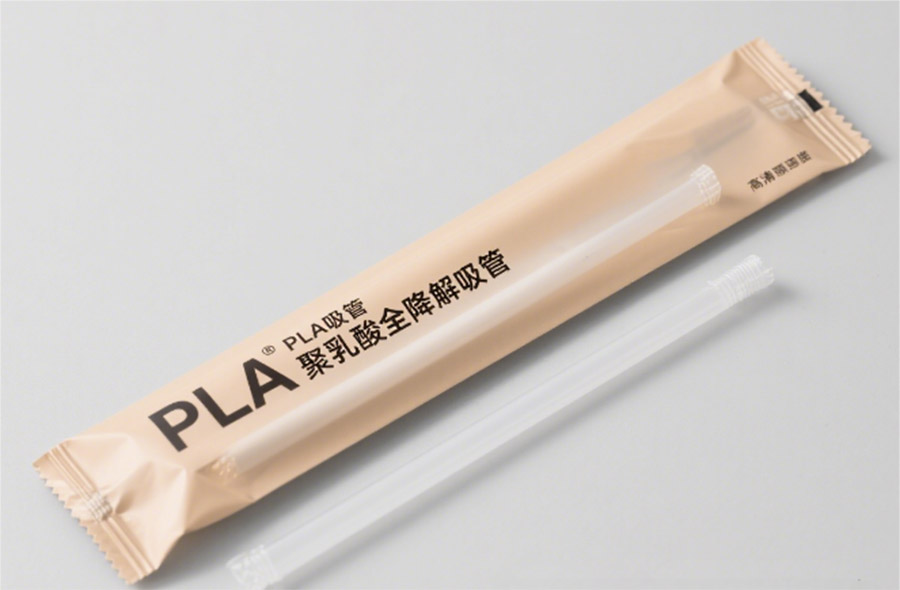
If you observe carefully, you will find that there is a line of words written on the outer packaging of the straw: PLA is degradable.
Let's first talk about the issue with the paper straw itself. The surface of the paper straw seems very environmentally friendly, but in reality, the glue is used for bonding,playing an important role in shaping .So we still haven't broken away from the field of polymer materials.
Unfortunately, the quality of the glue used by paper straw manufacturers varies greatly. Many of them didn’t meet environmental protection requirements but also not meet the requirements of high-temperature resistance and dissolution resistance. During the usage, they will release toxic substances such as PFAS (perfluorinated and polyfluoroalkyl substances).
Polylactic acid (PLA), as a biodegradable material, is made by extracting starch raw materials from renewable plant resources, such as corn.
As early as 1932, DuPont, the American company that invented nylon, had used lactic acid as a raw material to synthesize polylactic acid with a high molecular weight.
Since the 1960s, due to its excellent biocompatibility, polylactic acid has been widely used in medical materials, such as suturing, tissue regeneration support materials, and mechanism materials for drug slow release systems.
By 1980, with the increasingly prominent problem of plastic waste, microbiodegradable plastics gradually attracted attention, and polylactic acid thus became a globally focused material.
PLA can be completely degraded by microorganisms in nature after use, eventually generating carbon dioxide and water, without polluting the environment. It is recognized as an environmentally friendly material.
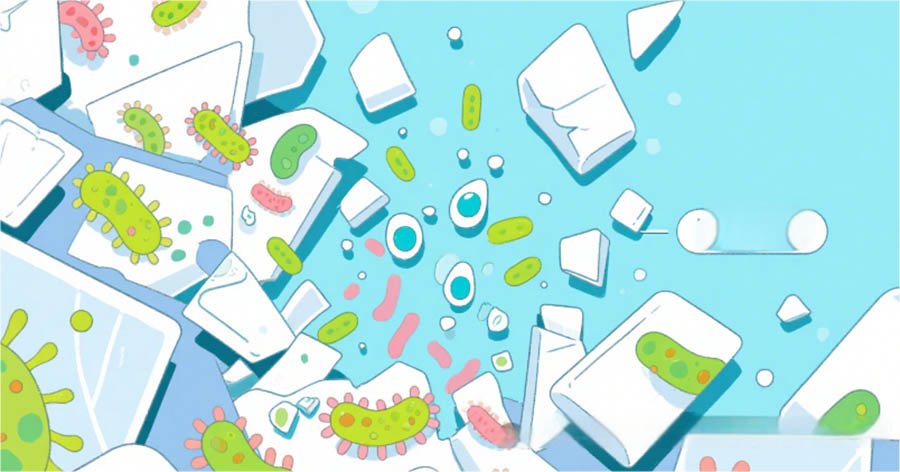
In contrast, the common treatment method for ordinary plastics is mostly incineration, which releases a large amount of greenhouse gases and discharges them into the air.
The carbon dioxide produced by the degradation of polylactic acid plastic buried in the soil can directly enter the soil organic matter or be absorbed by plants, and will not be discharged into the air, thus not causing the greenhouse effect.
The first step is that the raw material of PLA is starch. To obtain starch, it needs to be extracted from plants. So husk crops such as corn are crushed, starch is extracted from them, and then the starch is made into unrefined glucose.
The second step is fermentation. The fermentation process is similar to the production of beer or alcohol. By fermenting glucose, it is transformed into lactic acid similar to that added to food and used in human muscle tissue.
The third step is to obtain intermediate products, converting lactic acid monomers into intermediate products - water-reduced lactic acid and lactide through a special concentration method.
The fourth step is polymerization. After vacuum purification of the lactide monomer, the ring-opening action is completed in a solvent-free manner to achieve the polymerization of the monomer.
The fifth step is polymer modification. Due to the different molecular weights and crystallinity of polymers, the material's properties vary greatly. Therefore, PLA will be modified differently according to different application products.
Although the degradation rate of degradable plastic products in the natural environment is very slow, some external environmental conditions are needed to increase the degradation rate.
For instance, under the conditions of industrial composting, it is generally required that the temperature be above 55 degrees Celsius, there be abundant oxygen, the moisture content be approximately 60%, and it also takes a sufficient period of time, about one to two months, for complete degradation to occur.
Compared with the self-deception of paper straws, PLA straws are much more realistic.
Not only does it meet consumers' demands for the taste and texture of beverages, but it is also a non-toxic, harmless and degradable material in itself.
The chain leader believes that environmentally friendly products that take into account consumers' feelings and can meet the demands of the market environment are good products.
Spoločnosť Changzhou Jwell Machinery Co., Ltd., založená v roku 1997, sa už viac ako 15 rokov po sebe radí medzi najlepšie v čínskom extrúznom priemysle. Ako globálny dodávateľ kompletných riešení pre extrúznu technológiu má JWELL dlhú históriu a bohaté technologické skúsenosti. S viac ako 1 1,016 patentmi a 9 výrobnými základňami. Starostlivosť o vytrvalosť, úsilie o inovácie a zameranie sa na skúsenosti zákazníkov sú trvalým podnikateľským duchom spoločnosti JWELL. Ľudia v JWELL aktívne čelia novým priemyselným výzvam, novým materiálom a novým procesom. Neustále zrýchľujeme výskum a vývoj nových technológií, zameriavame sa na nové využitie energie, ľahké kompozitné materiály pre automobilový priemysel a jednorazové zdravotnícke pomôcky a zdravotnícke obaly. Zaväzujeme sa k najmodernejším technológiám spracovania a recyklácie plastov. Neustále inovujeme a vyvíjame extrúzne zariadenia v oblasti delenia polymérov. JWELL má moderné montážne dielne, 9 dielní na spracovanie veľkých komponentov a presné CNC stroje. Vďaka jedinečnej technológii spracovania sa snažíme zabezpečiť stabilitu každého komponentu. Venujeme pozornosť kontrole dielov a kontrole kvality a zabezpečujeme presnosť a spoľahlivosť všetkých dielov. Vynikajúca kvalita, dokonalosť ako jeden celok. Výnimočná spokojnosť zákazníkov. Chápeme a rešpektujeme víziu a stratégiu zákazníkov. Vďaka našej profesionalite a odhodlaniu neustále zlepšujeme kvalitu našich produktov, poskytujeme zákazníkom komplexné riešenia a neustále pre nich vytvárame hodnotu.

Srdečne vás pozývame navštíviť naše stánky na veľtrhu CHINAPLAS 2026 v Šanghaji, kde sa dozviete o našich najnovších poznatkoch v oblasti extrúzie, vyfukovania a recyklácie.

Prémiová neviditeľná autopolep slúži ako ochranný štít pre továrenský lak a zároveň ako mechanizmus na ochranu času, vďaka ktorému bude vaše drahocenné vozidlo vyzerať ako nové po celé desaťročie. Luxusné polepy nie sú len fyzickou bariérou; oni...

Raz bol zavedený zákaz plastov. Plastové slamky boli rýchlo odstránené z trhu, zatiaľ čo papierové slamky sa stali bežnými v extrémne krátkom čase. Slamky v obchodoch s mliečnym čajom boli všetky nahradené papierovými slamkami, ...
Dopyt po PEEK v automobilovom priemysle postupne rastie vďaka modernizácii materiálov automobilových dielov a smaltovanému drôtu vysokonapäťových motorov. Očakáva sa, že PEEK v niektorých častiach nahradí kov a iné technické plasty vďaka svojim výnimočným...
 EN
EN ES
ES PT
PT AR
AR RU
RU FR
FR BG
BG HR
HR DA
DA NL
NL DE
DE EL
EL IT
IT JA
JA KO
KO NO
NO PL
PL RO
RO SV
SV TL
TL IW
IW ID
ID LT
LT SR
SR UK
UK VI
VI ET
ET HU
HU MT
MT TH
TH TR
TR FA
FA AF
AF MS
MS SW
SW BE
BE IS
IS AZ
AZ KA
KA LA
LA ZU
ZU KK
KK TG
TG UZ
UZ KY
KY XH
XH